
Cricket Betting Rulebook: Rain Delays, DLS Method, Ties, and Settlement Criteria
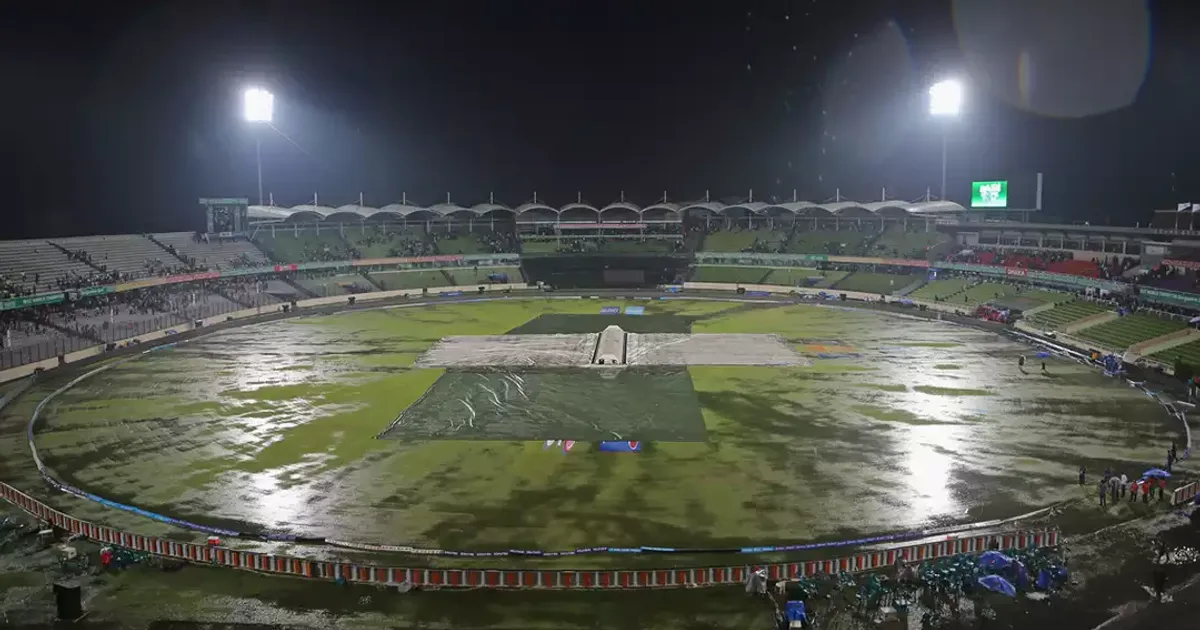
In sports wagering, few experiences cause as much confusion, dispute, and frustration as an unexpected weather interruption during an active cricket match. Unlike indoor sports played under fixed roofs, cricket is an outdoor game profoundly vulnerable to rain delays, bad light, pitch inundation, and revised over calculations.
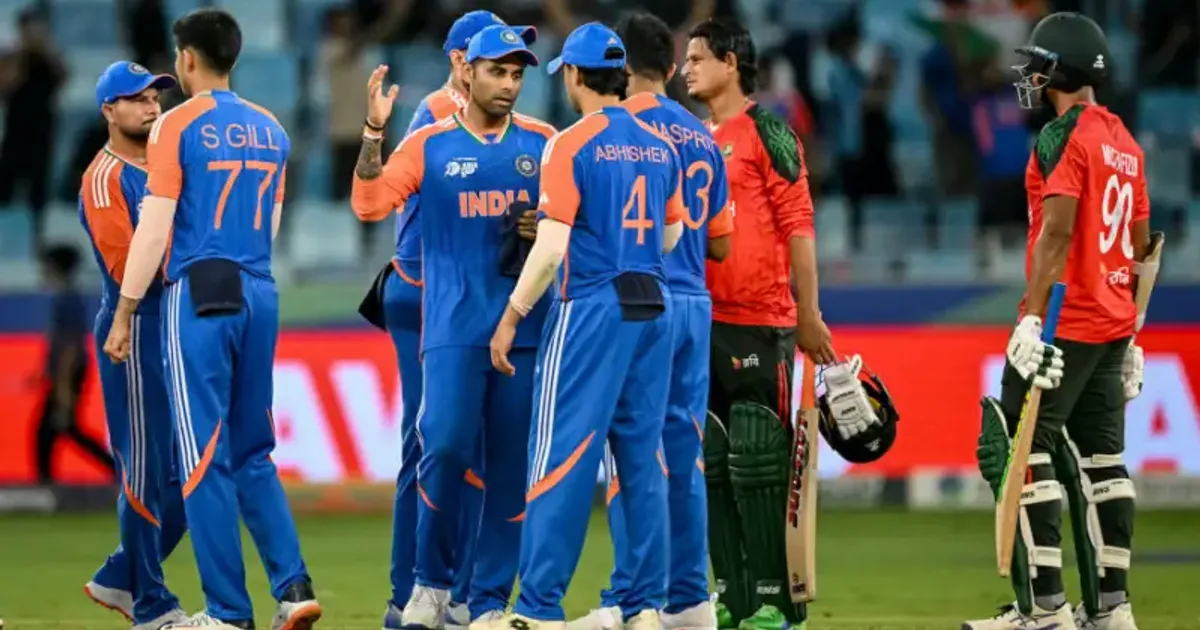
When monsoon rains lash a stadium in Sylhet during the Bangladesh Premier League, or a sudden tropical squall interrupts an international fixture, sportsbooks do not simply guess how to settle active bet slips. Every commercial bookmaker operates under a rigorous, internationally codified contractual rulebook that governs minimum over thresholds, the mathematical application of the Duckworth-Lewis-Stern (DLS) method, Super Over settlements, and Dead Heat rules.
Understanding these foundational rules before you stake real money is essential. A bet that appears to be winning on raw score totals can be settled as a loss or voided completely if official regulatory thresholds are not satisfied.
This comprehensive rulebook, authored by senior cricket analyst and sports rules editor Shakib Al-Amin, explains the core settlement criteria governing cricket betting. We break down the DLS method, detail minimum over requirements across T20, ODI, and Test formats, explain Super Over and Dead Heat calculations, and examine how abandoned matches are handled.
The Minimum Overs Threshold: When Does a Match Constitute an Official Result?
For a sportsbook to settle a two-way "Match Winner" wager as valid (rather than voiding the market and refunding stakes), a minimum number of overs must be bowled to constitute an official match under governing body regulations:
Twenty20 (T20) Matches (BPL, IPL, International T20s)
- Minimum Overs Requirement: Both teams must bat for a minimum of 5 complete overs (unless a team is bowled out inside 5 overs, which also constitutes a completed innings).
- The Scenario: If Team A bats their full 20 overs and posts 180 runs, but torrential rain halts the match after Team B has faced only 4.2 overs, the minimum over threshold has not been met. In this situation, the match is officially declared a "No Result." The sportsbook will void all un-settled match-winner wagers, and 100% of player stakes will be refunded to active account balances.
- If 5 Overs Are Completed: If Team B has faced at least 5.0 overs when rain permanently halts play, the match is official. The winner is determined by comparing Team B's score against the par score calculated by the Duckworth-Lewis-Stern (DLS) method, and all match-winner bets are settled accordingly.
One Day International (ODI) Matches (50 Overs)
- Minimum Overs Requirement: Both teams must bat for a minimum of 20 complete overs (unless a team is bowled out earlier).
- If rain permanently halts play when the chasing side has faced only 18 overs, the match is declared a "No Result," and match-winner bets are voided and refunded. If 20 overs have elapsed, the DLS par score determines the winning team.
Five-Day Test Matches
- Settlement Rule: In Test cricket, match-winner markets (which include the "Draw" as a three-way option) stand regardless of weather interruptions, provided at least one ball is bowled. If weather washes out four days of play and the match concludes in an inevitable draw, all wagers placed on the "Draw" are settled as winning bets, while wagers on Team A or Team B are settled as losses.
The Duckworth-Lewis-Stern (DLS) Method in Betting Settlements
The Duckworth-Lewis-Stern method is a sophisticated mathematical formula adopted by the International Cricket Council (ICC) to recalculate fair target scores in weather-shortened limited-overs matches:
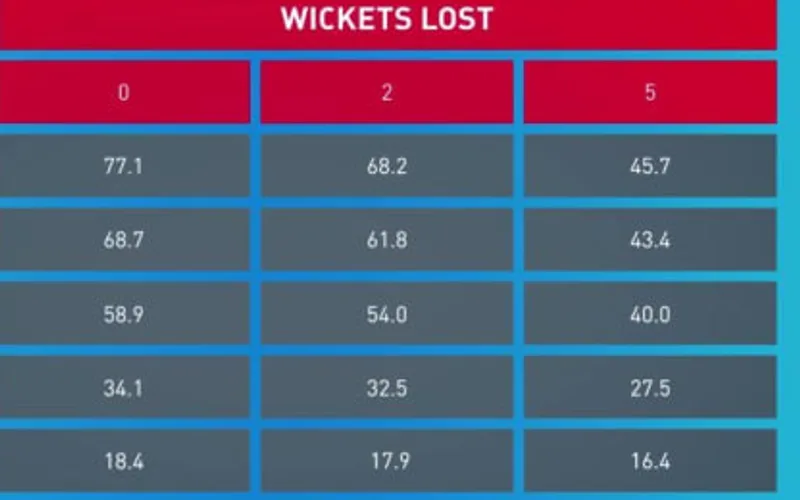
How DLS Operates Mathematically
The DLS system calculates that every team begins an innings with two distinct resources: remaining overs and remaining wickets in hand. When overs are lost to rain, a team's available resources are diminished:
- If Team A bats 20 overs and Team B's innings is reduced to 12 overs before they begin batting, Team B's target is not simply reduced proportionally (e.g., target is not simply 12/20ths of Team A's score). The target is adjusted upward to compensate for the fact that Team B can bat with higher aggression knowing they only need to preserve 10 wickets over 12 overs.
How Sportsbooks Settle Bets Under DLS
- Match Winner Bets: Are settled strictly based on the official match result announced by the match referee. If Team B satisfies the revised DLS target (or is ahead of the DLS par score when rain permanently terminates the match), Team B is settled as the winner.
- Pre-Match Team Run Totals (Over/Under Lines): This is where many casual bettors become confused. If you placed a pre-match wager on "Team A to Score Over 165.5 Runs in 20 Overs," and rain interrupts Team A's innings after 14 overs (reducing the match to a 14-over contest), your wager cannot be evaluated under original 20-over rules. Unless the team had already cleared 166 runs prior to the rain interruption, all specific 20-over session markets are voided and refunded.
- The Unconditional Rule: If a market’s outcome had already been unconditionally determined prior to the rain interruption (e.g., you bet on Over 45.5 Powerplay Runs, and the team scored 52 runs in the first 6 overs before rain arrived in over 8), your bet is settled as a winning wager, because the outcome was already physically achieved and could not be altered by subsequent weather.
Super Overs and Tied Matches
In modern limited-overs cricket, tied scores at the conclusion of regular overs are resolved through a Super Over (a one-over tiebreak shootout):
Match Winner Market Settlement
- Two-Way Markets (No Draw Option): Most modern commercial sportsbooks offer two-way match-winner markets. In these markets, the outcome of the Super Over determines the winner. If Team A and Team B tie on 160 runs, and Team A scores 15 runs in the Super Over while Team B scores 12, Team A is settled as the winner.
- Three-Way Markets (With Draw/Tie Option): If you specifically selected a three-way market that included "Tie" as an explicit betting option, the market is settled based exclusively on the regular 20 or 50 overs. If the scores are tied at the end of the 20th over, the "Tie" selection is paid out as the winning bet, regardless of who subsequently wins the Super Over.
Proposition Markets Do Not Count Super Over Stats
A vital universal rule across all sportsbooks: runs scored, wickets taken, boundaries hit, and extras conceded during a Super Over DO NOT count toward standard player or match proposition markets.
- If an opening batsman scored 48 runs during regular play and hits a six in the Super Over, his official individual match score for betting settlement remains 48 runs. If his individual run line was set at Over 49.5 Runs, the bet is settled as a loss.
Dead Heat Rules: When Multiple Selections Tie
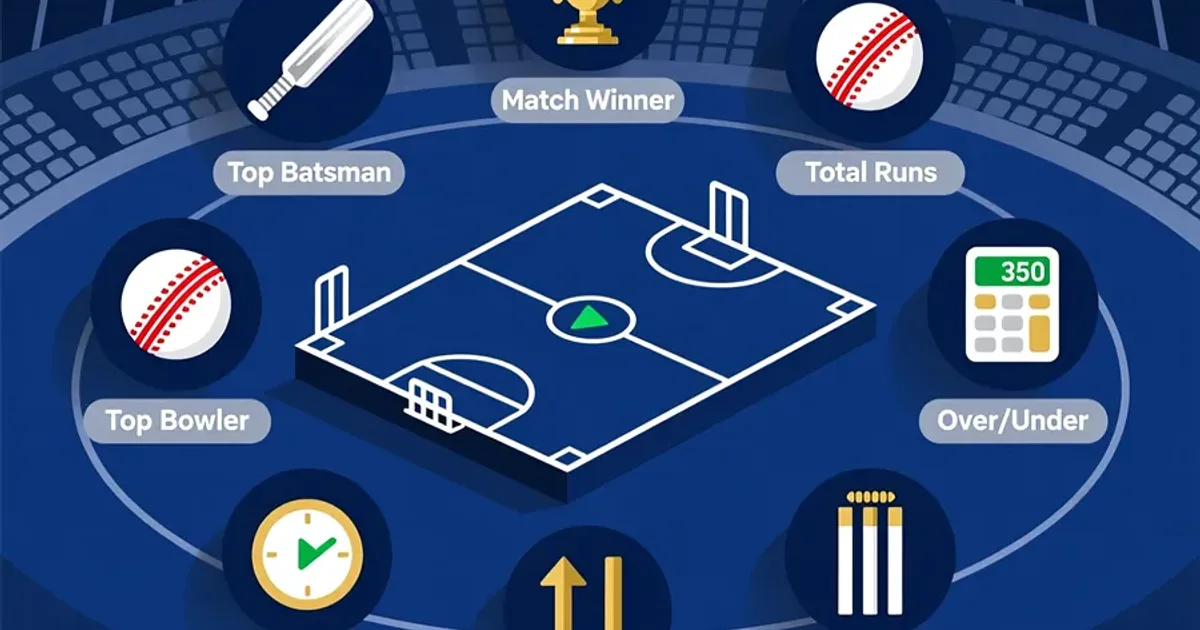
In proposition markets—such as "Top Team Batsman," "Top Team Bowler," or "Tournament Outright Top Run-Scorer"—it is common for two or more players to finish with identical statistics:
The Dead Heat Calculation Formula
When a Dead Heat occurs, your stake is divided proportionally by the total number of tied winning selections, and paid out at the original full odds:
Dead Heat Return = (Original Stake / Number of Tied Players) * Original Odds
Practical Step-by-Step Example
Suppose you place a 1,000 BDT wager on Shakib Al Hasan to be the "Top Team Wicket-Taker" for Bangladesh at decimal odds of 4.00:
- At the conclusion of the match, Shakib Al Hasan and Mustafizur Rahman both finish with 3 wickets each, tying for the top spot.
- Applying the Dead Heat Rule: Because two players tied, your 1,000 BDT stake is divided by 2:
Effective Stake = 1,000 BDT / 2 = 500 BDT - Total Return:
500 BDT * 4.00 = 2,000 BDT(resulting in a 1,000 BDT net profit on your initial 1,000 BDT outlay).
Player Propositions: Retired Hurt vs Retired Out
Understanding how player substitution and retirement rules affect individual proposition markets prevents common misunderstandings:
Retired Hurt
If a batsman suffers an injury, heat exhaustion, or concussion and leaves the field with the umpire’s consent designated as "Retired Hurt":
- The batsman is treated as an active, not-out participant who may return to bat later in the innings.
- If the batsman does not return, their score at the moment they retired is their final score for settling individual run lines.
- In "Next Batsman Out" markets, a batsman retiring hurt does not count as a wicket. Wagers on that market roll over to the subsequent dismissal.
Retired Out
If a batsman leaves the crease without an injury, purely for tactical reasons to allow a faster boundary hitter to bat (a growing tactical trend in modern T20 leagues like the IPL):
- The batsman is officially scored as "Retired Out".
- This counts officially as a wicket and dismissal for all bowling and batting proposition markets.
Bowler Maximum Overs and Incomplete Innings
In limited-overs cricket, bowlers are subject to strict quota restrictions (maximum 4 overs per bowler in a 20-over match; maximum 10 overs in a 50-over match):
- If rain shortens an innings after a match has commenced, individual bowler maximum quotas are recalculated downward by match officials.
- If a bowler has already completed their revised quota (e.g., a bowler bowled 3 overs before rain reduced the match to 12 overs per side, where the maximum quota is 2 overs), the bowler cannot bowl again, but their completed figures stand for all "Top Bowler" market settlements.
Summary Checklist for Disputed Bet Settlements
If you believe a bet slip was settled incorrectly following a weather interruption or tiebreak:
- Check the Official Governing Body Scorecard: Sportsbooks settle bets strictly based on the official match report issued by the International Cricket Council (ICC) or the domestic board (such as the BCB or BCCI), not media commentary.
- Verify Minimum Overs Completion: Confirm that both teams reached the mandatory over threshold (5 overs in T20; 20 overs in ODI).
- Review the Exact Market Title: Check whether you backed a two-way match winner (including Super Over) or a specific regular-overs proposition.
- Contact Customer Support with Evidence: If a factual discrepancy exists, present the official match scorecard and your Bet Slip ID to live chat support via our Customer Service Guide or request formal mediation through our Dispute Resolution Desk.