

Responsible Gaming Policy: Player Safety, Self-Exclusion, and Support Resources
Gambling should always be approached as a paid form of digital leisure, similar to buying a ticket to a concert, dining out, or paying for streaming services. When you place a wager on a cricket match or play a round of Live Baccarat, you are paying for entertainment value. The moment gambling is viewed as an investment strategy, a source of regular income, or a solution to personal financial hardship, it becomes inherently dangerous.
At Takabet Bangladesh, we are dedicated to promoting safe, informed, and responsible participation across all digital gaming platforms. This guide outlines practical boundary-setting techniques, self-assessment tests, early warning indicators of problematic behavior, self-exclusion workflows, and confidential support channels available to players in Bangladesh.
The Core Reality: Understanding the Mathematics of Gambling
To participate responsibly, every player must understand the mathematical framework that governs all commercial gaming platforms:
The House Advantage Is Inescapable
Every casino game—whether digital slots, live dealer tables, crash games, or card games—is mathematically engineered with a built-in house advantage (often expressed as Return to Player or RTP). While individual players can and do win in the short term due to statistical variance, the operator is mathematically guaranteed to generate a profit over millions of rounds. No betting system, progressive formula, or timing strategy can overturn this mathematical reality.
Randomness and Statistical Independence
In games governed by Random Number Generators (RNGs) or physical card shoes, every round is an independent event. If a roulette wheel lands on Red five times in a row, the probability of it landing on Black on the next spin remains completely unchanged. Believing that a specific outcome is "due" to occur is known as the Gambler’s Fallacy, and it is one of the most common psychological traps that lead to escalating financial losses.
Sports Wagering Unpredictability
While sports analysis, pitch assessment, and team statistics can help identify value odds, no sporting event has a guaranteed outcome. Weather changes, injuries, referee decisions, and unexpected momentum shifts mean that even the strongest favorites can lose. Never stake money on sports betting under the assumption that a victory is certain.
Practical Rules for Healthy Bankroll Management
Maintaining control requires proactive discipline before you log in to any gaming account. Our editorial team strongly recommends following these foundational rules:
Establish a Strict Leisure Budget
Decide at the start of each month or week exactly how much discretionary entertainment income you can afford to lose without affecting your standard of living. This money must be completely separate from essential living expenses, including rent, food, family obligations, education fees, utility bills, and emergency savings. Once this leisure budget is exhausted, stop playing immediately until your next budgeted entertainment cycle.
Set Firm Session Time Limits
Digital platforms and mobile applications are designed for immersion. It is remarkably easy to lose track of time when playing fast-paced games. Set an alarm or smartphone timer for 30 to 45 minutes before starting a session. When the timer sounds, log out of the platform, step away from your device, and engage in non-gaming activities.
Never Chase Financial Losses
The impulse to place larger, riskier bets in an attempt to quickly recover lost money is the single most destructive behavior in gambling. Chasing losses almost invariably leads to deeper financial damage. Accept that losses are simply the price of entertainment, close the app, and walk away.
Avoid Gambling Under Emotional or Physical Stress
Never gamble when you are feeling anxious, depressed, angry, or exhausted. Similarly, never place wagers when under the influence of alcohol or medication. Impaired judgment leads to impulsive decisions, broken budget limits, and excessive risk-taking.
Treat Winnings as a Pleasant Surprise, Not Income
If you experience a profitable session, withdraw your initial deposit and a portion of the winnings immediately. Do not leave large balances in your account with the intention of placing larger bets, as paper profits can evaporate rapidly during subsequent sessions.
Self-Assessment: Recognizing the Warning Signs
Problem gambling develops gradually. Often, individuals do not recognize that their habits have become harmful until significant financial or emotional damage has occurred.
Review the following questions honestly. If you or a loved one answers "Yes" to two or more of these questions, it indicates that gambling is becoming a problematic influence in your life:
- Do you spend more time or money gambling than you originally planned?
- Have you ever lied to family members, partners, or colleagues to conceal the extent of your gambling activity?
- Do you feel a strong urge to immediately return to gambling after losing, hoping to win back your money?
- Have you ever borrowed money, taken loans from friends, or sold personal possessions to fund gambling or pay gambling debts?
- Does the thought of reducing or stopping gambling cause you to feel irritable, restless, or anxious?
- Have you ever neglected work responsibilities, family commitments, or personal health to gamble online?
- Do you gamble as a coping mechanism to escape stress, loneliness, depression, or marital conflict?
- Have you ever hidden your mobile phone, deleted transaction receipts on bKash or Nagad, or cleared browser histories to hide betting activity from others?
Acknowledging these behaviors is not a sign of weakness; it is the essential first step toward regaining control.
Platform Tools: How to Enforce Boundaries
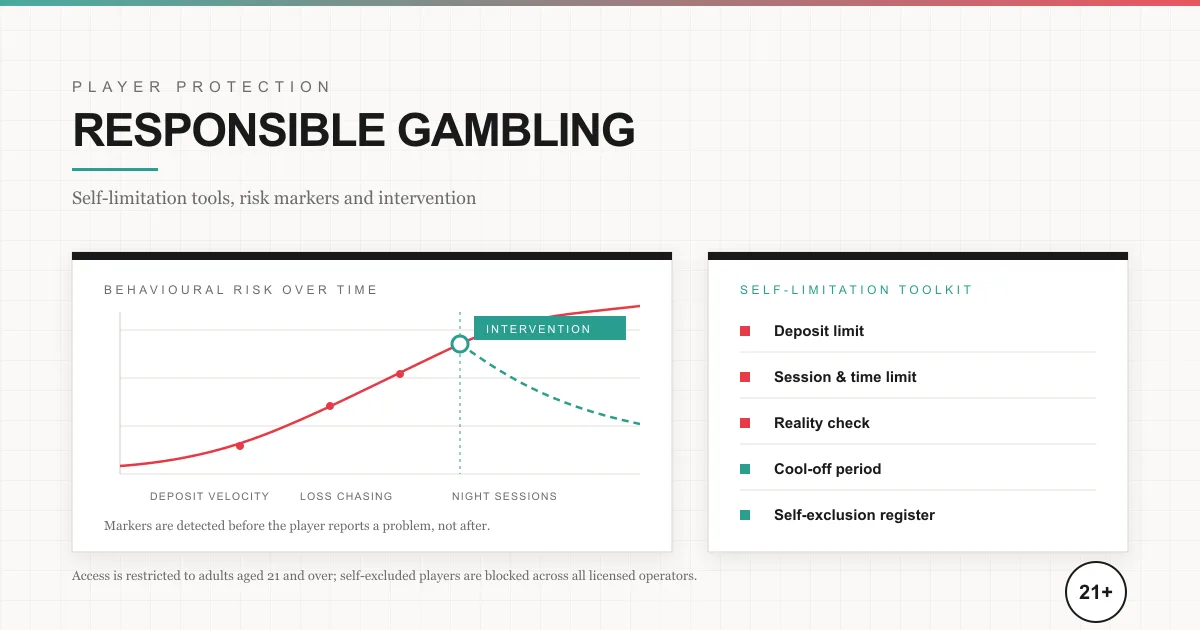
Modern, responsible gaming operators provide built-in tools designed to help players maintain discipline. We strongly urge all players to activate these features directly through their account profile or by contacting customer support:
Deposit and Spending Limits
You can instruct the platform to set strict caps on how much money you can deposit into your account on a daily, weekly, or monthly basis. Once this threshold is reached, the system will automatically block further deposits until the designated time window resets. Lowering your deposit limit takes effect immediately; requesting an increase typically involves a mandatory 24 to 48-hour cooling-off period to prevent impulsive decisions.
Session and Reality Checks
Many platforms offer automated pop-up notifications that appear on your screen at regular intervals (such as every 30 or 60 minutes). These alerts inform you of how long you have been logged in, how much money you have wagered, and your net win or loss for the session, giving you a clear prompt to log out.
Temporary Cooling-Off Periods
If you feel that your gaming is becoming too frequent or stressful, you can request a temporary cooling-off period lasting from 24 hours up to 30 days. During this time, the operator will suspend your account, prevent you from logging in or placing bets, and cease sending promotional SMS or email messages.
Permanent Self-Exclusion
For individuals experiencing severe gambling difficulties, permanent self-exclusion is the most effective administrative step. When you self-exclude, the operator locks your account for an extended duration (typically 6 months, 1 year, or permanently). The operator will cancel any remaining bonus credits, return your remaining real-money balance to your registered mobile wallet, and block your phone number, email address, and IP range from opening new accounts across their network.
To initiate self-exclusion, contact customer support via live chat or email and state clearly: "I want to permanently self-exclude my account due to responsible gaming concerns."
Protection of Minors: Strict 18+ Requirement
Online gaming and sports betting are strictly intended for consenting adults aged 18 and older. Engaging in gambling during adolescence can severely disrupt personal development, education, and financial habits.
Our Underage Policy
Our website and all associated guides are strictly intended for adult audiences. We do not design content for or market our resources to minors.
Practical Steps for Parents and Guardians
If you share computers or mobile devices with children or teenagers, we recommend implementing the following safeguards:
- Never save your gaming passwords, bKash PINs, or Nagad credentials in browser autofill features on shared devices.
- Do not leave gaming apps or betting portals logged in and unattended on family tablets or smartphones.
- Install reputable parental control and content-filtering software such as Net Nanny, Qustodio, or Google Family Link to block access to online gambling domains.
- Educate young people about the financial risks and mathematical realities of gambling, framing it as an adult activity that requires strict boundaries.
Free, Confidential Problem Gambling Support Resources
If you or someone you care about is struggling to manage gambling habits, you do not have to navigate the challenge alone. Professional, confidential support is available completely free of charge from dedicated international organizations:
BeGambleAware
BeGambleAware provides comprehensive, confidential information, advice, and support to help individuals make informed choices about gambling and access treatment resources.
- Website: begambleaware.org
- Services: Free live chat support, educational resources, self-assessment tools, and professional referral pathways.
Gamblers Anonymous
A global fellowship of men and women who share their experience, strength, and hope to help each other overcome compulsive gambling habits.
- Website: gamblersanonymous.org
- Services: Free peer-led support group meetings, twelve-step recovery programs, and online virtual meetings accessible worldwide.
Gambling Therapy
A dedicated global service offering practical advice and emotional support to individuals affected by problem gambling outside the United Kingdom.
- Website: gamblingtherapy.org
- Services: Multilingual live text support with trained advisors, peer support forums, online groups, and practical coping strategies.