
Cricket Match Prediction Guide: Pre-Game Analytics, Pitch Assessment, and Tactical Matchups

In the modern era of data-driven sports analytics, successful cricket wagering is not a matter of luck, superstition, or emotional team loyalty. While the unpredictable nature of athletic competition ensures that no sporting outcome is ever 100% guaranteed, disciplined sports analysts approach cricket matches as complex statistical systems governed by quantifiable environmental and tactical variables.
Every cricket fixture is shaped by a confluence of critical factors: the soil composition and grass coverage of the pitch, the micro-climatic humidity and evening dew points, boundary dimensions and wind vectors, and specific bowler-versus-batsman tactical matchups.
A knowledgeable bettor who systematically evaluates these pre-match variables before the opening delivery possesses an immense analytical edge over the casual recreational crowd that simply wagers on famous player names or popular favorites.
This comprehensive handbook, authored by veteran cricket journalist and senior sports analyst Shakib Al-Amin, outlines the exact empirical methodology used by professional analysts to predict cricket match dynamics. We examine how to interpret pitch curator reports, analyze head-to-head player matchups, factor in weather anomalies, evaluate team selections, and avoid the pervasive trap of fraudulent social media tipsters.
The Four Pillars of Systematic Match Prediction
Before placing any pre-match or live in-play wager, professional analysts pass every fixture through a rigorous four-stage analytical filter:
[ Step 1: Surface & Venue ] ──► [ Step 2: Meteorological Data ]
             │                                   │
             â–¼                                   â–¼
[ Step 3: Matchup Analytics ] ──► [ Step 4: Lineup Declarations ]
Surface and Pitch Assessment: Reading the 22 Yards
In cricket, the pitch is the single most decisive variable on the field. Unlike football or tennis where playing surfaces are standardized and uniform, a cricket pitch is a living, evolving organic surface that directly dictates ball behavior, bounce, pace, and lateral movement:

Soil Types and Moisture Content
- Red Clay Soil (True Bounce and Pace): Red clay tracks (such as those at Wankhede Stadium in Mumbai or Zahur Ahmed Chowdhury Stadium in Chattogram) feature strong binding properties. They provide even, true bounce and allow the ball to come onto the bat cleanly. Batsmen can play through the line with total trust, leading to high-scoring encounters where backing the "Over" on total match runs provides strong value.
- Black Soil (Turn and Low Bounce): Black soil tracks (frequently encountered at the Sher-e-Bangla Stadium in Mirpur or Chepauk in Chennai) hold moisture initially but dry into abrasive, crumbling surfaces. Spinners extract sharp grip and variable bounce, while fast bowlers find success using cross-seam cutters that stay low. Matches on black soil frequently yield low-scoring struggles where boundary hitting is scarce.
Pitch Visual Cues: Grass Coverage and Cracks
When analyzing pitch inspection reports broadcast prior to the match:
- Live Green Grass: Indicates seam movement and early lateral zip for fast bowlers with the new ball during the opening powerplay overs.
- Dry, White, or Bald Patches: Indicates an absence of moisture, meaning the pitch will slow down as the game progresses and offer significant assistance to finger and wrist spinners.
- Visible Surface Cracks: Suggests potential for unpredictable, erratic bounce as the match wears on, increasing the probability of bowled and LBW dismissals.
Meteorological and Atmospheric Factors: Humidity, Wind, and Dew
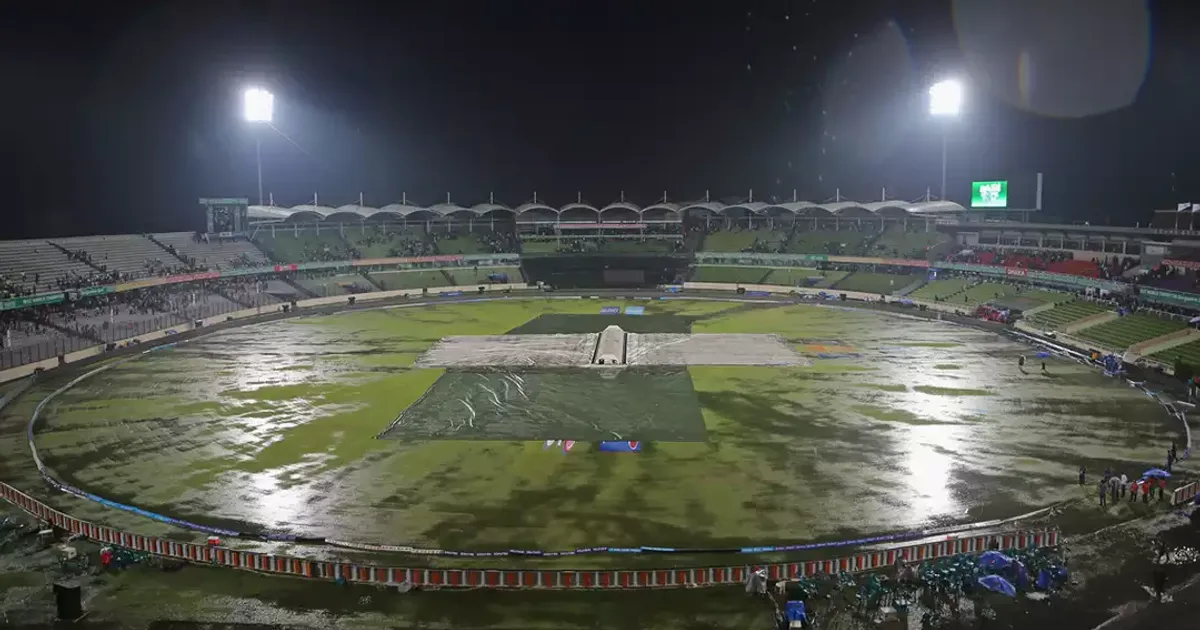
Cricket is profoundly influenced by local atmospheric conditions. Weather does not merely interrupt play—it fundamentally alters ball aerodynamics and ground conditions:
The Impact of Relative Humidity on Swing Bowling
Fast bowlers who specialize in conventional swing (such as Mustafizur Rahman, Trent Boult, or Shaheen Shah Afridi) rely heavily on atmospheric humidity and cloud cover. Heavy cloud cover keeps the air cooler and denser, allowing the seam of the cricket ball to grip the air and generate pronounced late swing. On hot, dry, cloudless afternoons, the ball rarely swings past the first two overs, allowing opening batsmen to score freely in the powerplay.
Ground Dimensions and Wind Vectors
Never evaluate match totals without reviewing the specific boundary dimensions of the venue:
- At smaller stadiums like the M. Chinnaswamy in Bengaluru (with square boundaries of 55 to 60 meters), mis-timed edges frequently clear the ropes for sixes.
- At massive venues like the Melbourne Cricket Ground or Narendra Modi Stadium in Ahmedabad (with square boundaries of 75 to 85 meters), the dynamic shifts entirely: batsmen who attempt to muscle the ball into the deep frequently hole out to boundary fielders.
- Furthermore, strong prevailing crosswinds make defending the shorter windward boundary nearly impossible, giving batting teams a designated target zone to exploit.
The Evening Dew Point
In day-night fixtures across South Asia between October and March, evening dew is often the single most decisive tactical variable of the entire match. As explored in our dedicated Toss Prediction Guide, heavy condensation coats the grass during the second innings, making it nearly impossible for bowlers to grip the wet leather ball. Teams chasing under heavy dew enjoy a massive statistical win advantage, regardless of the target size.
Head-to-Head Tactical Matchups (Micro-Battles)
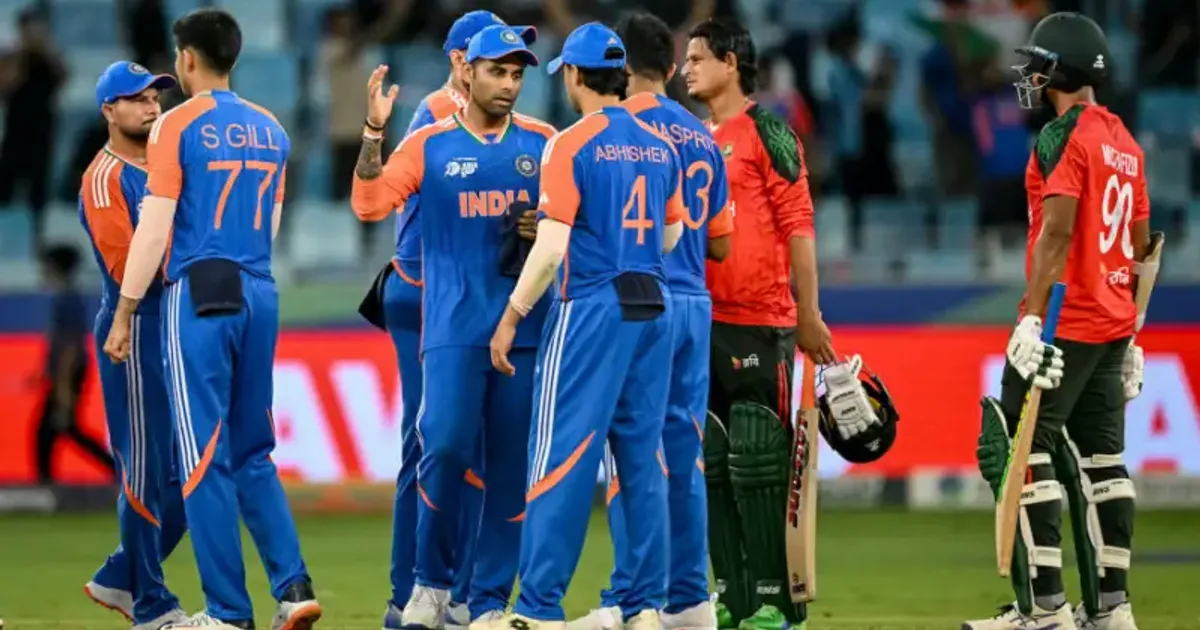
Cricket is not merely a contest between eleven players—it is a sequence of discrete individual duels between one bowler and one batsman. Analyzing specific tactical matchups reveals clear predictive patterns:
Bowling Archetype vs Batting Weaknesses
- Left-Arm Pace vs Right-Handed Openers: Historically, right-handed opening batsmen who plant their front foot across the line struggle against high-velocity left-arm fast bowlers who swing the new ball back into the right-hander’s pads.
- Leg-Spin / Wrist-Spin vs Middle-Order Anchors: Modern T20 analytics demonstrate that traditional accumulators who rely on placement struggle to score against wrist spinners who spin the ball both ways (googly vs leg-break).
- Analytical Application: If an opening batsman has been dismissed three times in his last five encounters by a specific bowler, backing that bowler in the "Player to Dismiss Batsman" proposition or taking the "Under" on the batsman’s individual run line carries strong empirical probability.
Death-Overs Resource Mapping
Before placing a match wager, map out how the bowling captain intends to allocate their 20 overs:
- Identify which bowlers will deliver overs 16 through 20.
- If a team possesses world-class opening bowlers but lacks verified death-overs specialists—forcing them to bowl part-time spinners or inexperienced domestic pacers at the death—the batting team will frequently score 50 to 60 runs in the final four overs, dramatically shifting the final projected total.
Team Selection and Toss Realities
Placing pre-match wagers hours before the toss is one of the most common mistakes made by casual bettors. Always delay placing your primary wagers until two critical events occur:
The Official Team Sheet Declaration
Thirty minutes before the opening ball, team captains submit their official starting XIs:
- Rest and Rotation: Premier fast bowlers are frequently rested for workload management during congested tournament schedules like the BPL or IPL. If a team’s strike bowler is replaced by a developmental reserve, the team’s true win probability drops significantly.
- Tactical Lineup Adjustments: Verify whether a team has included an extra specialist spinner on a turning track or strengthened their lower-order batting depth to counter a chasing venue.
The Coin Toss Outcome
Never finalize a wager before observing the coin toss:
- In venues heavily influenced by evening dew or deteriorating daytime pitches, the captain who wins the toss can dictate the terms of the match.
- Winning the toss and choosing to chase in heavy dew can shift a team's true probability of winning by as much as 10% to 15%, instantly altering the mathematical value of the betting board.
Exposing the Myth of "Inside Fixing Tips" and Telegram Scams
In Bangladesh, social media platforms (particularly Telegram, Facebook, and WhatsApp) are saturated with fraudulent channels advertising "100% Guaranteed Match Predictions," "Fixed Pitch Reports," or "Paid VIP Khata Leaks."
Our editorial board urges all readers to understand the fundamental truth:
The Anatomy of the Tipster Scam
- Advance-Fee Fraud: These operators demand upfront payments ranging from 1,000 to 10,000 BDT via bKash or Nagad in exchange for a "sure-shot prediction."
- The Split-Audience Trick: Fraudulent tipsters divide their audience into two groups: they tell Group A that Team 1 will win, and they tell Group B that Team 2 will win. Whichever team wins, 50% of their audience believes the tipster possesses genuine inside information, enabling the scammer to demand even larger fees for the next match.
- The Reality: High-level international and franchise cricket is subject to intensive anti-corruption surveillance by the ICC Anti-Corruption Unit (ACU). Match outcomes are determined by physical athletes competing under unpredictable conditions. Anyone claiming to possess guaranteed fixed outcomes is an anonymous criminal attempting to steal your money.
Bankroll Discipline and Value Identification
Systematic match prediction is an exercise in probability, not prophecy. Even when your analytical preparation is flawless, unexpected match events—such as a dropped slip catch, a controversial umpire decision, or sudden injury—can overturn a well-reasoned prediction.
Protect your entertainment capital by following these professional rules:
- Only Wager on Value Odds: Never back a team simply because you think they will win. You must ask: Is the bookmaker’s price higher than the true statistical probability of the outcome? If an elite team has a 60% chance of winning (true fair odds of 1.67) but is priced at 1.45, backing them is mathematically disadvantageous over the long run.
- The 1% Staking Model: Never stake more than 1% to 2% of your designated leisure bankroll on any single cricket match.
- Maintain Emotional Detachment: Treat cricket wagering strictly as paid leisure. Never chase losses after a narrow defeat, and consult our Responsible Gaming Policy to set hard monthly deposit limits before the season begins.