
Live In-Play Cricket Betting: Ball-by-Ball Odds, Momentum Shifts, and Execution Tactics
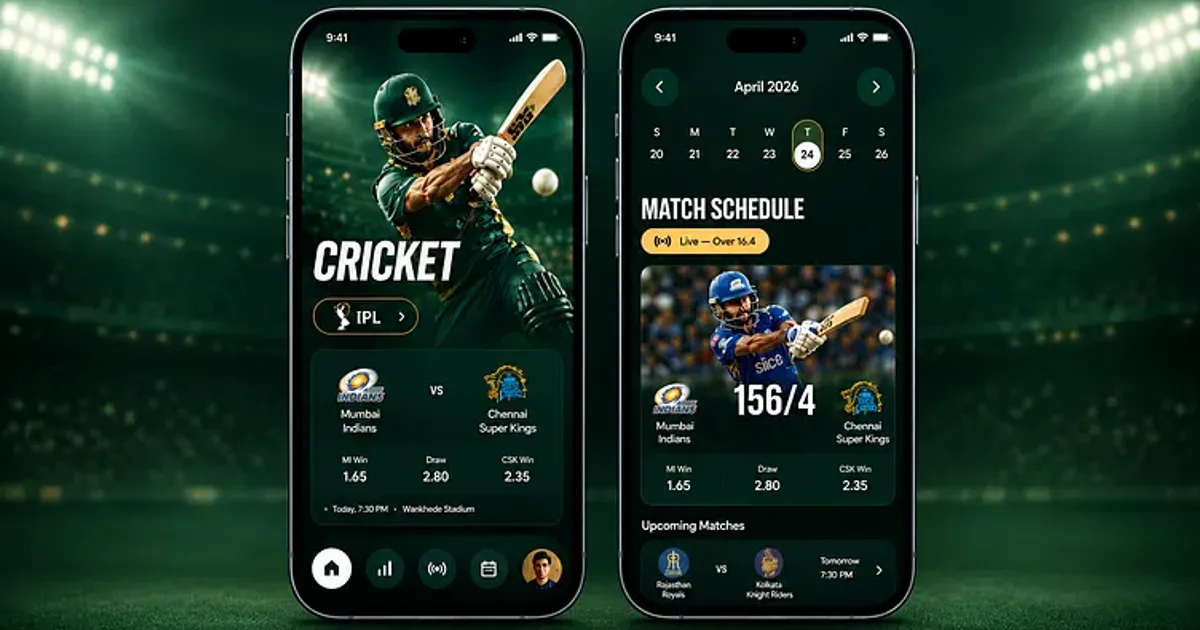
In modern sports entertainment, pre-match wagering represents only the opening chapter of the betting experience. The true epicenter of excitement, strategic depth, and high liquidity in cricket betting is the live in-play market. Unlike traditional sports like football where goals occur infrequently, Twenty20 and One Day International cricket matches produce significant competitive events on virtually every single delivery.
A single ball can yield a towering boundary six, a run-out dismissal, a maiden over, or an umpire review that dramatically swings the win probability of a contest in seconds. As live television and streaming feeds broadcast every delivery, automated sportsbook algorithms constantly recalculate odds, offering dynamic markets on match winners, session run totals, boundary propositions, next-wicket dismissal methods, and instant over-by-over lines.
However, trading in-play cricket markets successfully requires far more than casual intuition. Live wagering demands split-second analytical discipline, an understanding of bookmaker latency buffers, emotional control under rapid price swings, and a deep appreciation for match momentum.
This comprehensive guide, authored by senior sports analyst Shakib Al-Amin, provides an advanced analytical handbook for live in-play cricket betting from Bangladesh. We break down the mechanics of dynamic price formation, explain how to identify algorithmic mispricings during momentum shifts, detail over-by-over trading strategies, and present strict bankroll safeguards.
How In-Play Cricket Odds Are Formed: The Algorithmic Engine
To find value in live betting markets, you must first understand how commercial sportsbooks generate and adjust live prices:
The Mathematical Win Probability Matrix
Modern sportsbooks do not employ human traders who manually set prices after every ball. Instead, live odds are powered by automated algorithmic engines that process millions of historical ball-by-ball data points. The algorithm constantly recalculates the Required Run Rate (RRR) versus the Current Run Rate (CRR), factoring in:
- The exact number of remaining deliveries and wickets in hand.
- Historical venue scoring averages under similar match circumstances.
- Individual batsman strike-rate profiles against specific bowling types (pace vs spin).
- Live pitch conditions and weather variables.
The Bookmaker Latency Buffer (The 5 to 8 Second Delay)
When you submit a live in-play bet, you will notice an intentional administrative delay:
- The system pauses your bet slip for 5 to 8 seconds before formally confirming the wager.
- Why this exists: The sportsbook enforces this buffer to protect itself against "courtsiding" (individuals at the physical stadium with high-speed transmission tools placing wagers before televised broadcast signals reach viewers). If a wicket falls or a boundary is struck during your 6-second buffer window, the system automatically rejects your bet and displays the newly updated price.
Mastering Key In-Play Cricket Markets
In-play wagering offers specialized proposition markets tailored to live match scenarios:
Live Match Winner (Two-Way Moneyline)
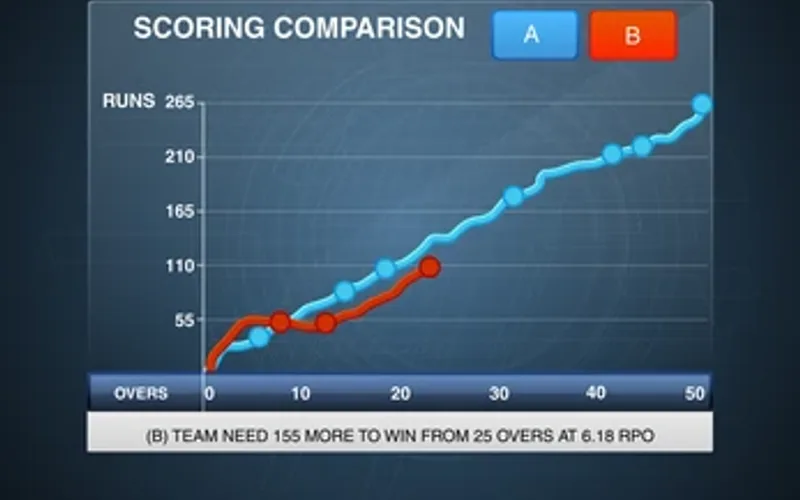
The live outright market tracks the shifting probability of victory. Because T20 cricket features dramatic swings, pre-match favorites who suffer early top-order collapses frequently trade at heavily inflated underdog odds during the powerplay, creating outstanding entry points for experienced analysts who recognize underlying squad depth.
Next Over Run Total (Over/Under Lines)
Before the commencement of each individual over, the sportsbook sets a line predicting total runs scored in that specific 6-ball block (e.g., Over/Under 7.5 Runs):
- Tactical Focus: Analyze the specific bowler-batsman matchup. If an express fast bowler known for erratic lines bowls to a set, aggressive top-order batsman, the likelihood of extras (wides and no-balls) and boundaries increases significantly.
- Conversely, when an economical defensive spinner bowls to a newly arrived batsman who has faced zero deliveries, the "Under" line carries strong statistical probability.
Method of Next Dismissal (Proposition Market)
Wagering on how the next batsman will be dismissed (Caught, Bowled, LBW, Run Out, Stumped, or Others):
- In limited-overs cricket, "Caught" accounts for approximately 65% to 70% of all dismissals, particularly on larger grounds where batsmen attempt to clear deep boundary ropes.
- On slow, spinning tracks like Mirpur during the BPL, the probability of "LBW" or "Bowled" rises sharply when finger spinners target the stumps from around the wicket.
Innings Session Runs (Over 10 / Over 15 / Over 20 Totals)
Wagering on the cumulative total runs a team will reach at designated milestone overs:
- These markets provide an effective way to trade middle-overs momentum without predicting the final 20-over match conclusion.
Identifying and Exploiting In-Play Momentum Shifts
The greatest analytical edge in live cricket betting lies in recognizing psychological and tactical momentum shifts before automated bookmaker algorithms adjust their pricing:
The Post-Wicket Over-Correction
Bookmaker pricing algorithms are programmed to react aggressively to the fall of a wicket:
- When a premier batsman is dismissed, the team’s live win odds will instantly drift, and the projected team total will drop by 10 to 15 runs.
- The Opportunity: If the incoming batsman is an experienced international player of equal caliber, or if the remaining batting lineup possesses proven death-overs hitting depth, the algorithm frequently over-corrects. Backing the batting side’s revised team total immediately following a dismissal often secures heavily discounted prices.
The Strategic Time-Out Momentum Break
In leagues like the IPL and BPL, mandatory strategic timeouts halt play for two and a half minutes:
- Empirical cricket data demonstrates that strategic timeouts frequently break the rhythm of batting pairs who have built fluid momentum.
- Captains use the pause to reset bowling fields and issue tactical instructions. Wickets fall with remarkable statistical frequency within the first six deliveries following a strategic timeout. Experienced in-play bettors often look to back the bowling side or take the "Under" on runs immediately following a timeout.
The Sudden Dew Point Shift
In day-night fixtures across South Asia, evening dew rarely settles gradually—it often coats the outfield rapidly around the 8th or 10th over of the second innings:
- The moment you observe fielders wiping their trousers or umpires inspecting a wet ball, live conditions have transformed.
- Spinners can no longer impart revs on the ball, fast bowlers lose their yorker grip, and wet outfields cause ground balls to skid rapidly to the boundary.
- Algorithms that rely on dry-condition historical modeling will consistently underestimate chasing totals once heavy dew is present.
Automated and Partial Cashout: Locking Profit Mid-Match
One of the most powerful risk-management tools in modern live sportsbooks is the Cashout feature:
How Cashout Operates Mathematically
The sportsbook continuously calculates the fair market value of your active bet slip based on current live probabilities. If you backed a team at pre-match odds of 2.50 and they cruise to 100/1 at the halfway stage, the bookmaker will offer an early cashout amount that allows you to collect a guaranteed profit immediately, eliminating the risk of a late-innings collapse.
When to Execute a Live Cashout
- Volatile Death-Overs Scenarios: If your backed team is ahead but relies on inexperienced death-overs bowlers against explosive opposition finishers, taking an early cashout protects your profit from sudden boundary explosions.
- Weather Deterioration: If rain clouds loom and an approaching squall threatens to shorten the match, initiating a cashout prevents your wager from being subject to unpredictable Duckworth-Lewis-Stern revisions.
- For an exhaustive mathematical analysis of cashout margins, consult our dedicated guide on Cashing Out Bets Mid-Match.
Emotional Discipline: Overcoming In-Play Cognitive Traps
Live in-play betting occurs in an intense, adrenaline-fueled environment. Without ironclad discipline, players can fall victim to severe psychological traps:
The "Revenge Betting" Catastrophe
When a carefully planned pre-match wager fails due to an early top-order collapse, the emotional impulse to immediately place larger in-play bets to "win the money back before the match ends" is extremely powerful.
- The Golden Rule: Never place a live wager out of frustration or panic. In-play bets placed in an agitated emotional state almost invariably ignore tactical realities and result in compounding financial losses.
Beware of the TV Broadcast Latency Trap
Televised satellite broadcasts and digital streaming apps (such as Disney+ Hotstar, T Sports, or Rabbitholebd) often carry latency delays ranging from 5 to 20 seconds behind live stadium reality.
- Never attempt to "out-speed" the sportsbook based on your television screen. The platform’s automated data scouts at the venue transmit ball outcomes in milliseconds.
- Always use the sportsbook’s integrated live tracker or Takabet Mobile App score display to ensure you are viewing live time, not delayed broadcast history.
The 1% Bankroll Allocation Rule
In-play markets move rapidly, making it easy to place five or six wagers on a single match.
- Strictly enforce a maximum 1% to 2% bankroll limit per match, regardless of how many individual in-play slips you open.
- If you allocate 500 BDT to an IPL fixture, ensure the combined sum of all your pre-match and in-play bets on that match does not exceed 500 BDT. Review our Responsible Gaming Policy to set hard session boundaries.