
Real Money Andar Bahar Guide: Rules, First-Card Odds, Side Bets, and Payout Math
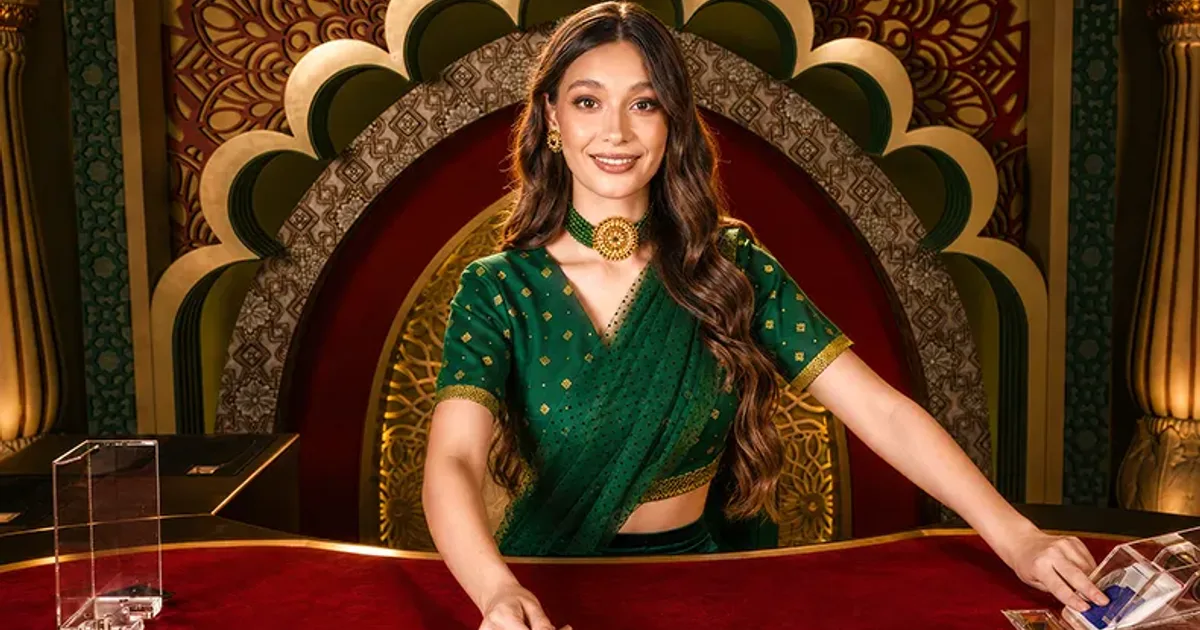
Across South Asia, few traditional card games carry the cultural resonance, effortless simplicity, and rapid excitement of Andar Bahar (frequently known in regional dialects as Katti or Mangatha). Originating centuries ago in southern India and played at festival gatherings and family celebrations across Bangladesh and India, Andar Bahar has made a triumphant transition into modern digital live casino studios.
Today, through high-definition live video feeds broadcast by premier studios like Ezugi, Evolution Gaming, and Super Spade Games, Bangladeshi players can participate in authentic, real-money Andar Bahar games dealing physical 52-card decks with professional human dealers.
However, while the game’s core objective—betting on which side will match the opening "Joker" card—appears delightfully simple, beneath the surface lies a subtle mathematical framework. The dealing order introduces a structural mathematical bias favoring the side that receives the first card, and modern live tables feature an extensive array of high-volatility side bets spanning card colors, suits, and total cards dealt.
This comprehensive guide, authored by senior gaming mathematician Tanvir Hassan, provides an exhaustive analytical breakdown of Real Money Andar Bahar on Takabet. We explain the core rules, calculate exact mathematical probabilities between Andar and Bahar, demystify side bet payout matrices, and outline disciplined bankroll management strategies.
The Fundamental Objective and Game Flow
Andar Bahar is played with a standard single deck of 52 physical playing cards (excluding jokers), shuffled and dealt from a physical dealing shoe:
The Opening Step: Dealing the Middle (Joker) Card
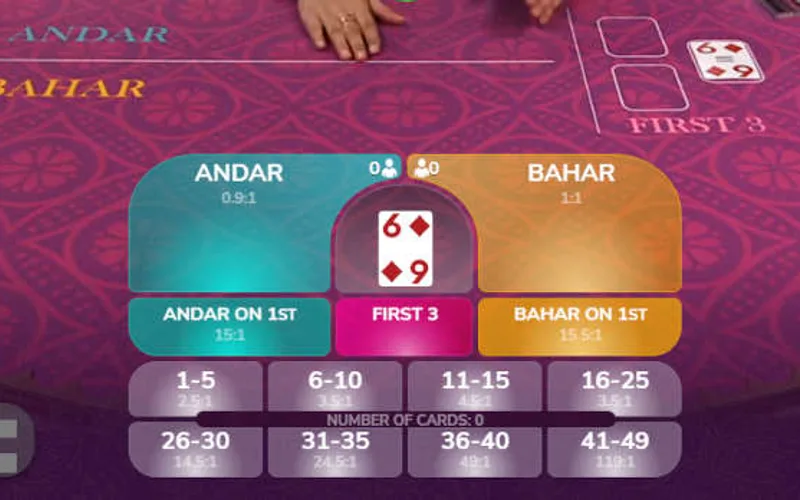
The round begins with the dealer shuffling the deck and cutting a single card face-up into the center of the table. This card is officially known as the "Joker", the "Trump", or the "Game Card" (e.g., an 8 of Diamonds).
Important Clarification: The card is called the "Joker" regardless of its actual rank or suit. Its rank (in this example, an 8) becomes the target value for the entire round. The suit of the card is irrelevant to the main game outcome.
The Two Betting Spots: Andar and Bahar
Beneath the central Joker card, the table layout is divided into two primary betting spots:
- Andar (Inside / Left): Refers to the inner or left-hand betting box.
- Bahar (Outside / Right): Refers to the outer or right-hand betting box.
The Dealing Sequence: Finding the Match
Once players submit their wagers, the dealer begins dealing cards one by one from the shoe, alternating strictly between Andar and Bahar:
- Cards are dealt alternately until a card appears that matches the exact rank of the central Joker card (e.g., another 8 of any suit: Hearts, Clubs, or Spades).
- Whichever side (Andar or Bahar) receives the matching card wins the round immediately. All cards are collected, the deck is reshuffled, and a new round begins.
The First-Card Dealing Rule and the Mathematical House Edge
The most critical mathematical concept every player must master is the First-Card Dealing Rule, which dictates which side receives the initial card:
The Suit-Based Starting Rule
In standard live dealer studios, the suit of the central Joker card dictates where the first card is dealt:
- Black Suits (Spades and Clubs): If the opening Joker card is Black, the first card is dealt to Andar.
- Red Suits (Hearts and Diamonds): If the opening Joker card is Red, the first card is dealt to Bahar.
- (Note: Some studio variants, such as standard Ezugi tables, always deal the first card to Andar regardless of suit. Always verify the specific studio rule on your screen).
The Mathematical Bias: Why the First Card Wins More Often
Because a standard deck contains only three remaining cards matching the Joker rank (e.g., if the Joker is an 8, there are only three other 8s remaining in the 51-card deck), the side that receives the first card possesses a slight mathematical advantage:
- Probability of First-Dealt Side Winning: Exactly 51.50%
- Probability of Second-Dealt Side Winning: Exactly 48.50%
Payout Adjustments to Preserve the House Edge
Because the first-dealt side holds an inherent statistical advantage, commercial casinos adjust payout ratios to maintain a structural house edge:
| Bet Outcome | Mathematical Probability | Standard Studio Payout Ratio | Net Theoretical House Edge (%) |
|---|---|---|---|
| First-Dealt Side (Andar/Bahar) | 51.50% | 0.90 to 1 (Pays 90% profit) | 2.15% (Best Bet on Table) |
| Second-Dealt Side (Andar/Bahar) | 48.50% | 1.00 to 1 (Even money: 100% profit) | 3.00% |
How the Math Operates in Practice:
- If you wager 1,000 BDT on the side that receives the first card and win, you receive 900 BDT in net profit plus your 1,000 BDT stake (returning 1,900 BDT total).
- If you wager 1,000 BDT on the side that receives the second card and win, you receive 1,000 BDT in net profit plus your 1,000 BDT stake (returning 2,000 BDT total).
- Analytical Conclusion: Even though the payout is slightly lower (0.90 to 1), the first-dealt side is the mathematically superior wager, carrying a lower house edge of 2.15% compared to 3.00% on the second-dealt side.
Live Andar Bahar Side Bets: Mechanics and Payout Matrices
To add excitement beyond the simple binary main game, modern live dealer studios (such as Ezugi and Evolution Gaming) offer specialized side bets placed before the cards are dealt:
First Three Cards Side Bet (Flop Bet)
This popular side bet wagers on the combination formed by the central Joker card and the first two cards dealt (one on Andar, one on Bahar), borrowing classic poker hand rankings:
- Straight Flush: Three consecutive cards of the exact same suit (e.g., 7, 8, 9 of Spades). Pays 120 to 1.
- Three of a Kind (Straight / Trio): Three matching ranks (e.g., three Jacks). Pays 70 to 1.
- Straight: Three consecutive cards of mixed suits (e.g., 5, 6, 7). Pays 8 to 1.
- Flush: Three cards of the same suit. Pays 5 to 1.
Total Cards Dealt Proposition Bets
This market allows you to wager on how many total cards will be dealt from the shoe before the matching Joker rank appears:
- 1 to 5 Cards: Pays 3.5 to 1 (Hit Probability: ~15.3%)
- 6 to 10 Cards: Pays 4.5 to 1 (Hit Probability: ~13.0%)
- 11 to 15 Cards: Pays 5.5 to 1 (Hit Probability: ~11.0%)
- 16 to 25 Cards: Pays 4.0 to 1 (Hit Probability: ~16.8%)
- 26 to 30 Cards: Pays 15 to 1 (Hit Probability: ~5.3%)
- 31 to 35 Cards: Pays 25 to 1 (Hit Probability: ~3.8%)
- 36 to 40 Cards: Pays 50 to 1 (Hit Probability: ~2.4%)
- 41 or More Cards: Pays 120 to 1 (A rare statistical outlier occurring in under 1.5% of rounds).
Joker Card Attribute Bets
Before the central Joker card is cut, players can wager on its physical attributes:
- Color (Red or Black): Pays 0.95 to 1 (48.08% probability, 3.85% house edge).
- Suit (Spades, Hearts, Clubs, Diamonds): Pays 3.80 to 1 (25.0% probability).
- Rank Range (Above 8, Below 8, or Exactly 8): Over/Under 8 pays 1 to 1, while landing exactly on an 8 pays 12 to 1.
Super Andar Bahar: Random Multiplier Variants
In recent years, Evolution Gaming introduced Super Andar Bahar, a high-voltage variant that incorporates random lightning-style multipliers into traditional gameplay:
How Multipliers Operate
In Super Andar Bahar, after the standard betting window closes, a certified Random Number Generator (RNG) randomly applies multipliers ranging from 20x up to 4,000x to specific "Total Cards Dealt" proposition categories.
- If the round resolves within that specific card count range, the standard payout is elevated by the assigned multiplier.
- Strategic Note: Just like in Lightning Roulette, base payouts on standard side bets are adjusted slightly downward to fund the random 4,000x jackpot multipliers. Super Andar Bahar offers extraordinary entertainment volatility, but conservative bankroll players should stick to standard live tables.
Strategic Wagering Frameworks for Andar Bahar
Because Andar Bahar outcomes are dictated by a shuffled physical deck, no betting progression can overcome the casino's structural house advantage. However, disciplined players follow these mathematical principles:
The "Follow the First Card" Strategy
- The Tactic: Always identify which side receives the initial card (based on the Joker suit rule) and place your main wager on that specific side.
- The Mathematical Justification: By consistently backing the side with a 51.50% win probability, you minimize the casino’s edge to 2.15%, optimizing your bankroll longevity compared to backing the 48.50% second-dealt side.
Avoid Heavy Exposure on High-Card Side Bets
- While a 120:1 payout on "41 or More Cards" appears tantalizing, that outcome occurs in fewer than 15 out of every 1,000 rounds. Placing consistent wagers on extreme side bets will drain your bankroll rapidly. Treat side bets as occasional, micro-stake novelties, reserving at least 85% of your betting capital for primary Andar or Bahar wagers.
Bankroll Discipline and Pacing
Andar Bahar rounds resolve rapidly—often in under 30 to 45 seconds if a matching card appears early in the deal:
- Pacing Your Session: Fast dealing speeds mean you can easily participate in 60 to 80 rounds per hour. Divide your total session bankroll into at least 40 to 50 small betting units (e.g., 50 BDT to 100 BDT per round if your budget is 3,000 BDT).
- Never Double Bet Sizes After Losses: Martingale progression betting is particularly dangerous in Andar Bahar; prolonged streaks of 8 or 10 consecutive wins on one side occur routinely in random probability, quickly hitting table limits and wiping out entire balances.
- Enforce Strict Time and Loss Limits: Set a firm stop-loss and a firm profit target before launching the table. When either is reached, close the stream immediately and review our Responsible Gaming Policy to maintain healthy personal boundaries.